
Walking again
From complete left-side paralysis to walking.
Case study · Hemorrhagic stroke
A full brain bleed through the thalamus and right hemisphere. Blood pressure 260/190. Left side paralyzed, not speaking, not there. This is what we did in the hospital—and after it.
Clinical case · Private Concierge · photography and video shared with the client's public consent
Before → After
Movement
BeforeLeft side completely paralyzed
AfterWalking unassisted
Speech
BeforeNot speaking, facial paralysis
AfterSpeaking again
Cognition
BeforeCognitively not there
AfterMemory is great
Blood pressure
Before260/190 at the bleed, spiking to 240/150 through hospital and rehab
After125/85 on average, on the full protocol and whole foods
Clots
BeforeClots in her bloodwork
AfterDissipated
Medications
Before28 in the hospital
AfterNone. Zero, prescriptions or over the counter
Pain medication
BeforeSix, incl. oxycodone and fentanyl
AfterOff all six
Weight
BeforeAround 275 lbs
After156 lbs
Breathing
BeforeOTC Afrin for 50 years to breathe
AfterBreathing without it
Stomach
BeforeTums by the handful 3–4× a day; pain, constipation then loose bowels
AfterStomach settled, no Tums
Pain
BeforeTylenol regularly, sometimes Excedrin Migraine, for back pain and headaches
AfterPain resolved, no pain relievers
Mood
BeforeUnstable; anger and rage could switch on
AfterStable
Mental health
BeforeLifelong anxiety, depression, panic
AfterGood, for the first time in her life
What they came in with
On September 9, a hemorrhagic stroke—a full brain bleed affecting the thalamus and the right hemisphere. Blood pressure at the time: 260/190.
A six-hour surgical procedure, then a tube in her head for a week because of continuous bleeding and intracranial pressure.
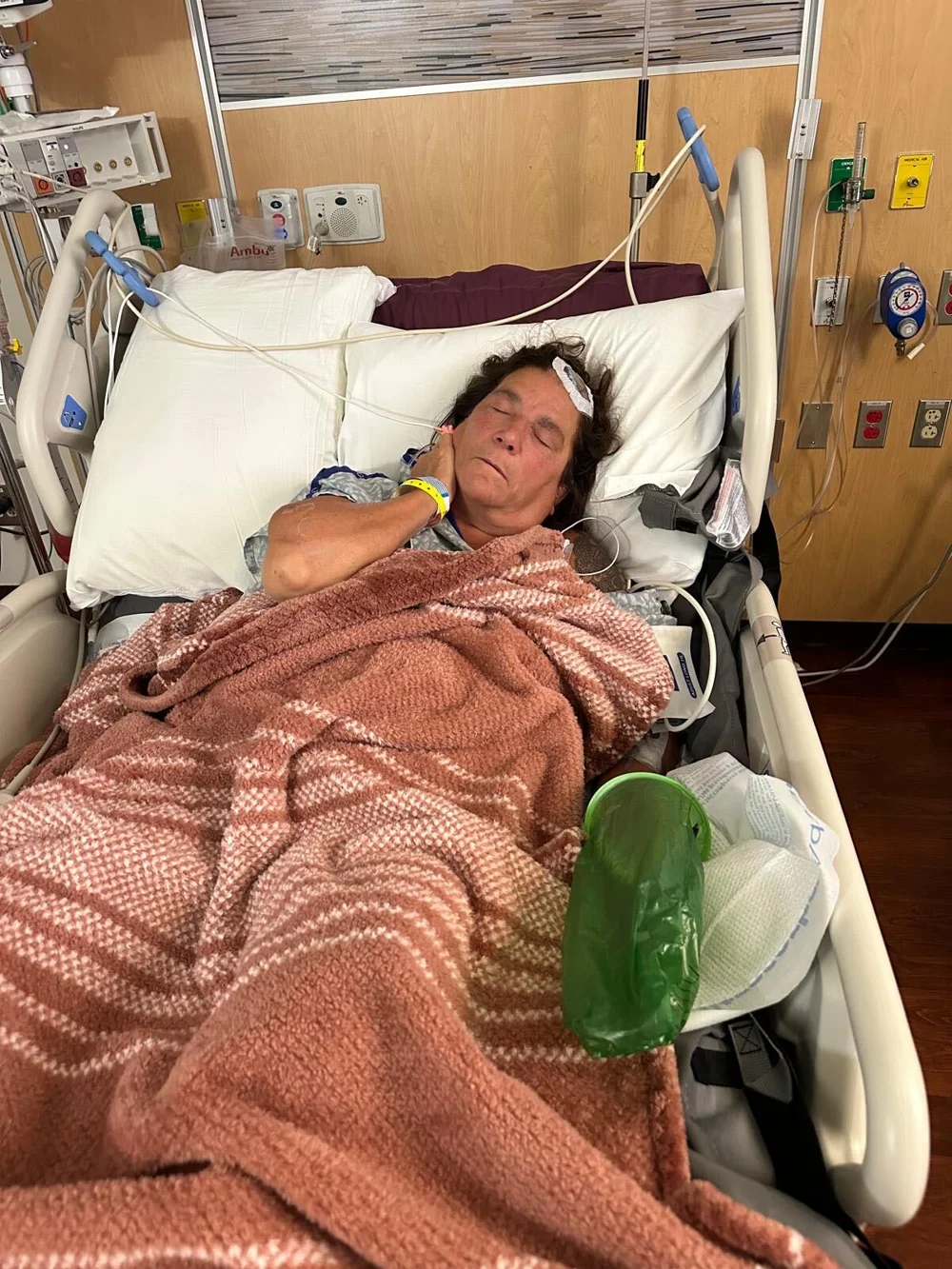
Complete paralysis of the left side of her body. Facial paralysis. Not speaking. Cognitively, not there.
That she would probably have another stroke—that she would end up dependent and in a wheelchair.
Tremendous stress, a history of alcohol, anxiety, depression and panic attacks. The stroke didn’t come out of nowhere.
She was put on 28 medications during her stay, and her blood pressure kept spiking to 240/150 at random through the hospital and stroke rehab.
OTC Afrin for 50 years because she couldn’t breathe. Antidepressants, anti-anxiety and sleep medication. Tums by the handful 3–4 times a day, regular Tylenol for back pain and headaches, sometimes Excedrin Migraine. Constant stomach pain, constipation then loose bowels. A mood that could turn to anger and rage.
What the assessments revealed
The bleed was the event. The years before it were the story.
What testing showed
7
Recommended medications contraindicated in stroke
Some listed death as a side effect. We said no.
Diagnosis
A full bleed affecting the thalamus and right hemisphere, with ongoing bleeding and intracranial pressure after surgery.
Broader picture
28 medications in hospital, including six pain medications such as oxycodone and fentanyl, and seven recommended medications contraindicated in stroke. She takes none of them now—no prescriptions, nothing over the counter.
Broader picture
Bloodwork showed clots, and a body carrying inflammation and organ strain that had to be cleared for the brain to repair.
Broader picture
Years of stress, alcohol, anxiety and panic—a nervous system that had never been allowed to rest.
Summary of hospital and follow-up findings; private records are not published.
The big picture
Blood pressure, stress, alcohol, inflammation and the nervous system were one story. Repairing the brain meant clearing the body around it—blood, clots, liver, kidneys—while waking up the side of the body that had gone quiet.
Standard care stabilizes. It rarely asks what else is on the chart, what the medications are doing, or how to actively drive neurological repair from day one.
Every brain bleed is different. We can’t separate exactly how much came from each therapy, and natural recovery plays a role.
The high-level protocol
01
Infrared red light, AMPCoil and tuning fork therapy, brought in while she was still hospitalized.
02
Off six pain medications, including oxycodone and fentanyl. Seven recommended medications contraindicated in stroke were denied.
03
PEMF therapy, infrared red light for neurological repair, proprioceptive activation, and brain entrainment for hemispheric syncing.
04
Built around inflammation, liver function, blood health, clot breakdown, kidney repair and high-potency neurological support.
Priorities, not a shopping list. Her plan was built for her brain and her bloodwork.
The biggest needle-mover
Most people wait until discharge to start rehabilitation. We brought infrared, AMPCoil and tuning fork therapy to her hospital bed—and fought to remove the medications that were working against a healing brain.
This stroke saved my wife’s life. She lost her way for many years. She wasn’t happy, we weren’t happy. We were just going through the motions and getting through each day. This stroke put things into perspective, we both had to change… A LOT. This has saved our marriage and allowed us to really live the rest of our lives. LIVE, not survive.
The outcome and timeline
September 9 · the stroke
Six-hour surgery, a week with a tube in her head. Complete paralysis of her left side. The hospital photo and video show the starting point.
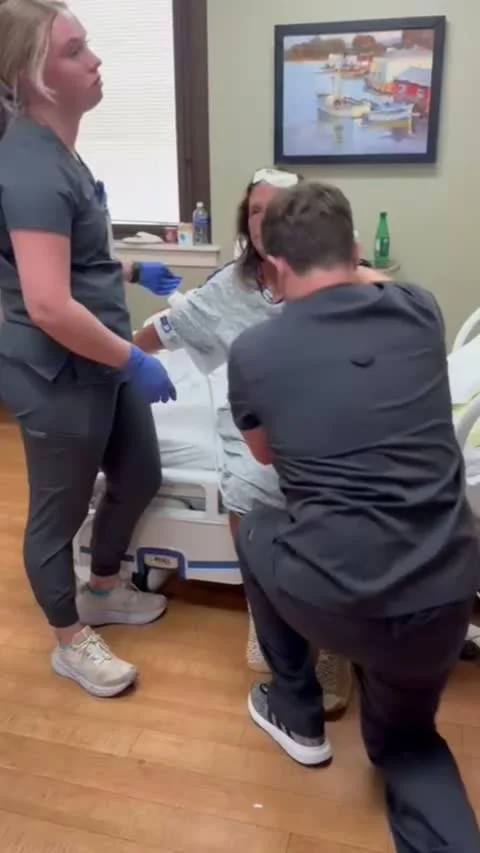
Hospital rehabilitation
Hospital staff supporting her during early rehabilitation after the stroke.
By January
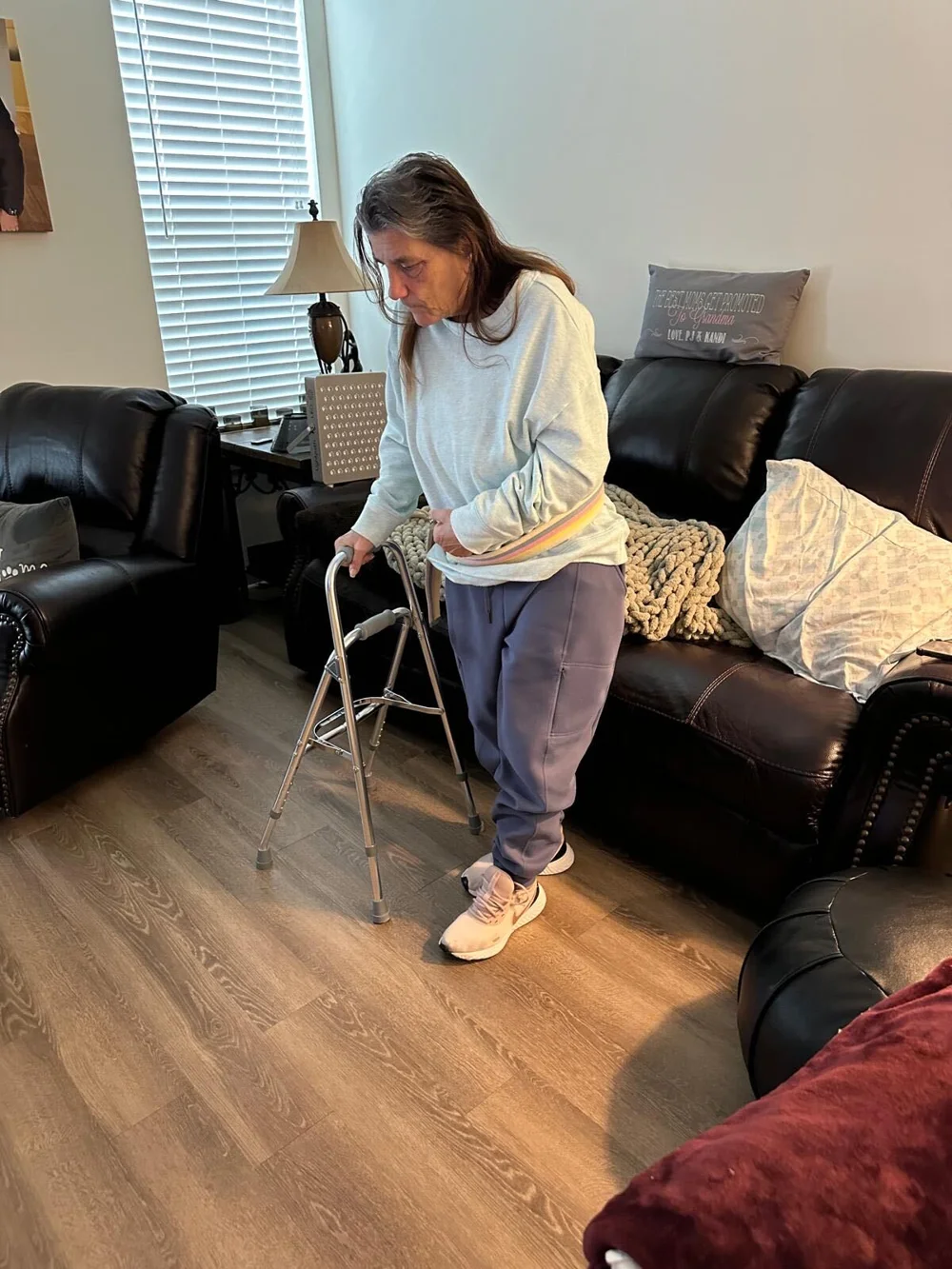
Biking and walking with assistance. The photo shows her using a walking aid; the video shows her pedaling a stationary bike with support.
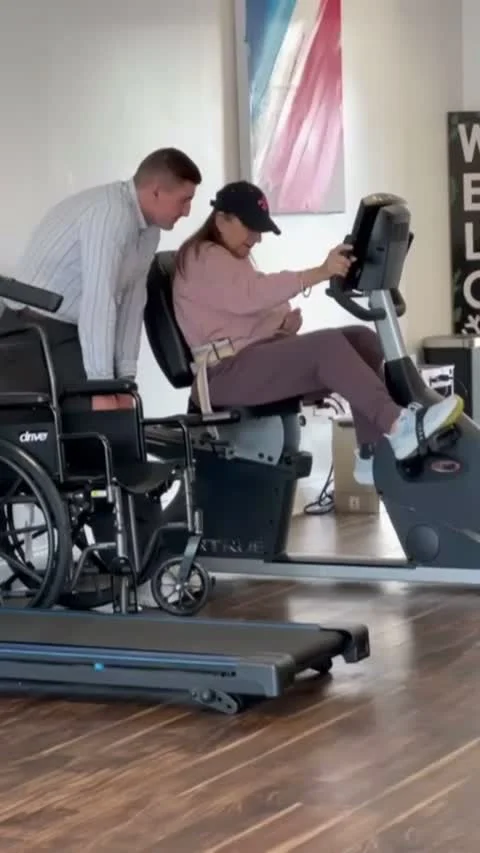
January · biking
Pedaling a stationary bike with support during recovery.
By June
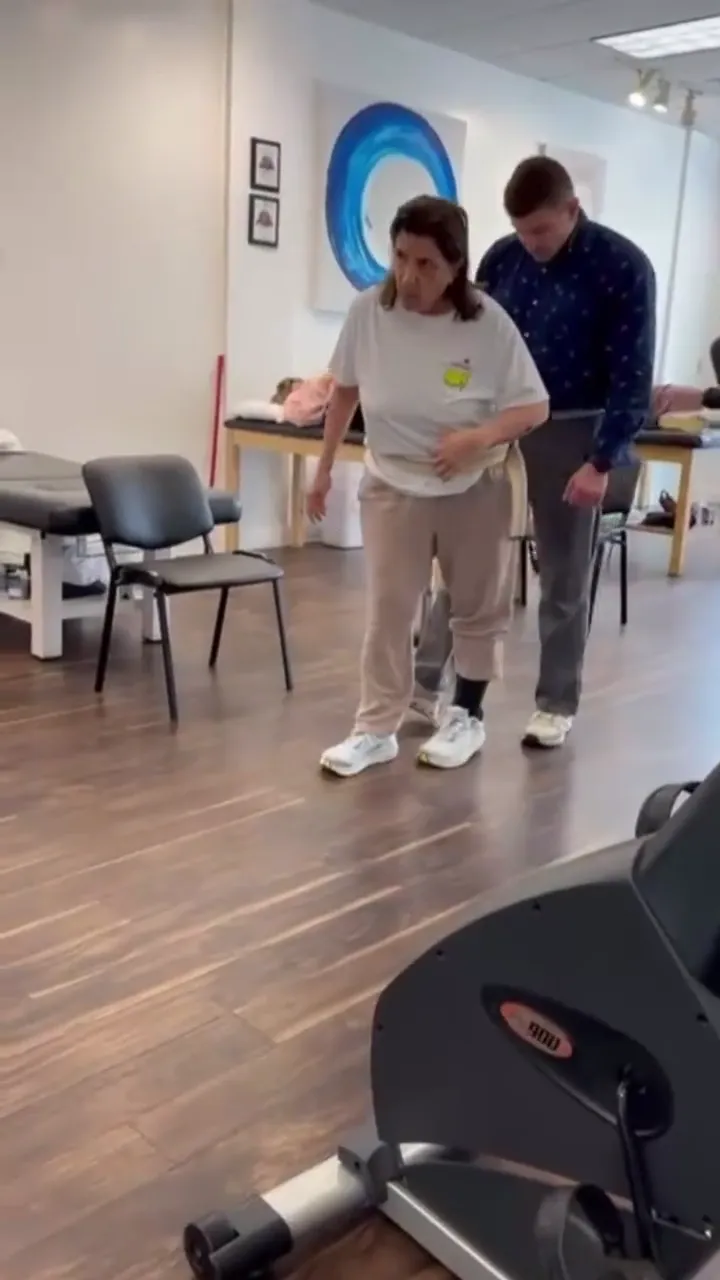
From complete left-side paralysis to walking without assistance. The video shows this later milestone.
June · walking unassisted
Walking unassisted by June after the September 9 hemorrhagic stroke.
From complete left-side paralysis to walking.
From not speaking and cognitively absent to great memory. A speech and cognition video is coming.
From 260/190 at the bleed—and random spikes to 240/150 through hospital and rehab—to 125/85 on average once she was home on the full protocol and eating whole foods. Clots have dissipated in her bloodwork.
From around 275 to 156 lbs, with inflammation down.
Off the 28 she arrived on—no prescriptions, nothing over the counter—and every follow-up lab marker is normal.
After a lifetime of anxiety, depression and panic attacks, her mental health is good—for the first time in her life.
Most people with this bleed don’t survive. Those who do are usually told: wheelchair, memory loss, no speech. She walks.
What follow-up testing showed
Follow-up labs show every marker normal: clots dissipated, inflammation down, blood pressure at 125/85 on average—and none of it held up by medication. Her pressure stabilized once she was out of the hospital, doing the full protocol and eating whole foods. She takes zero prescriptions and nothing over the counter.
Vitals
Blood pressure
Clotting
D-dimer
Clotting
Antiphospholipid syndrome
Heart
Troponin
Inflammation
CRP & ESR
Liver
Autoimmune liver condition
Pancreas
Amylase
Minerals
Phosphorus
Gut
Autoimmune gastritis
Hospital findings, then follow-up labs: every marker is normal now, with no medications behind it—no prescriptions, nothing over the counter. Private records are not published.
The skeptic’s question & the limits
Strokes “recover” with zero quality of life: long-term neurological damage, cognitive struggle, the risk of another clot and another stroke, impaired movement, a caretaker for daily life. The pathologies that caused the stroke linger, covered by 10–20 medications. Her oxycodone alone, six times a day, had her cognition so impaired we questioned whether it was the stroke at all. Off it, her speech returned. Normal rehab didn’t take her off fentanyl and oxycodone, didn’t refuse seven contraindicated medications, and didn’t bring infrared light to a hospital bed. Her doctors told the family to expect another stroke, dependence and a wheelchair. We worked alongside the surgeons who saved her life and went after everything that would decide how well she lived after.
Get evaluated, don’t assume: Sudden weakness, facial drooping, slurred speech or a severe headache is an emergency. Call 911 now.
Strokes “recover” with zero quality of life: long-term neurological damage, cognitive struggle, the risk of more clots and another stroke, impaired motor function, a caretaker, help with daily life like going to the bathroom. And the very pathologies that caused the stroke linger, covered up by 10–20 medications. A stroke is a wake-up call that you are living a life rooted in normalized stress, dysfunction and “normal” symptoms.
Surgery took the pressure off her brain. That was necessary, and it saved her life. But her brain healed exponentially because of everything else we did.
At one point her cognition was so impaired that we questioned whether this was damage from the stroke or something else. We got the medication list: she was on absurd doses of oxycodone, six times a day. She was high, like a heroin attack. We stopped the oxycodone and relied solely on Tylenol with codeine, and her speech returned and her cognition restored. Today she takes no medications at all—no prescriptions and nothing over the counter.
We worked with the hospital team while we advocated for her. We knew her whole health story beyond the stroke, and we had the labs, so we collaborated. The hospital staff focused on symptom after symptom, and often the symptom was caused by a medication, which led to more medications, most of them correcting side effects of the earlier ones. We used the medication package inserts, every black box warning and every contraindication, to show the doctors they were seeing her ONLY as a stroke patient, not as a whole person.
You don’t recover if you never investigate the cause. You can patch symptoms, or you can discover the cause. We select our most striking cases on purpose; this is not a promise of what every stroke will do.
If someone you love has had a stroke, stay with their medical team first. Then ask what else is being looked at: inflammation, blood health, clotting, liver and kidney load, and the nervous system’s repair. That whole-body work is what Private Concierge is for.
This is your calling
Waiting for the next appointment to finally be the one. For the next supplement, the next scan, the next specialist to hand you the magic thing. Waiting for something—anyone—to change.
Here is the truth: there is no magic thing. There is your whole picture, investigated. And there is a bigger reason to get it right.
A life
you do not need to recover from.
Ambition
that builds your dream life instead of draining it.
A family
that is an actual family—present, connected, making memories.
Success should not cost you your health, your home, or yourself.
We don’t guess. We assess. Private Concierge starts with data, then curates an individualized healing program implemented alongside you.
All case studies