
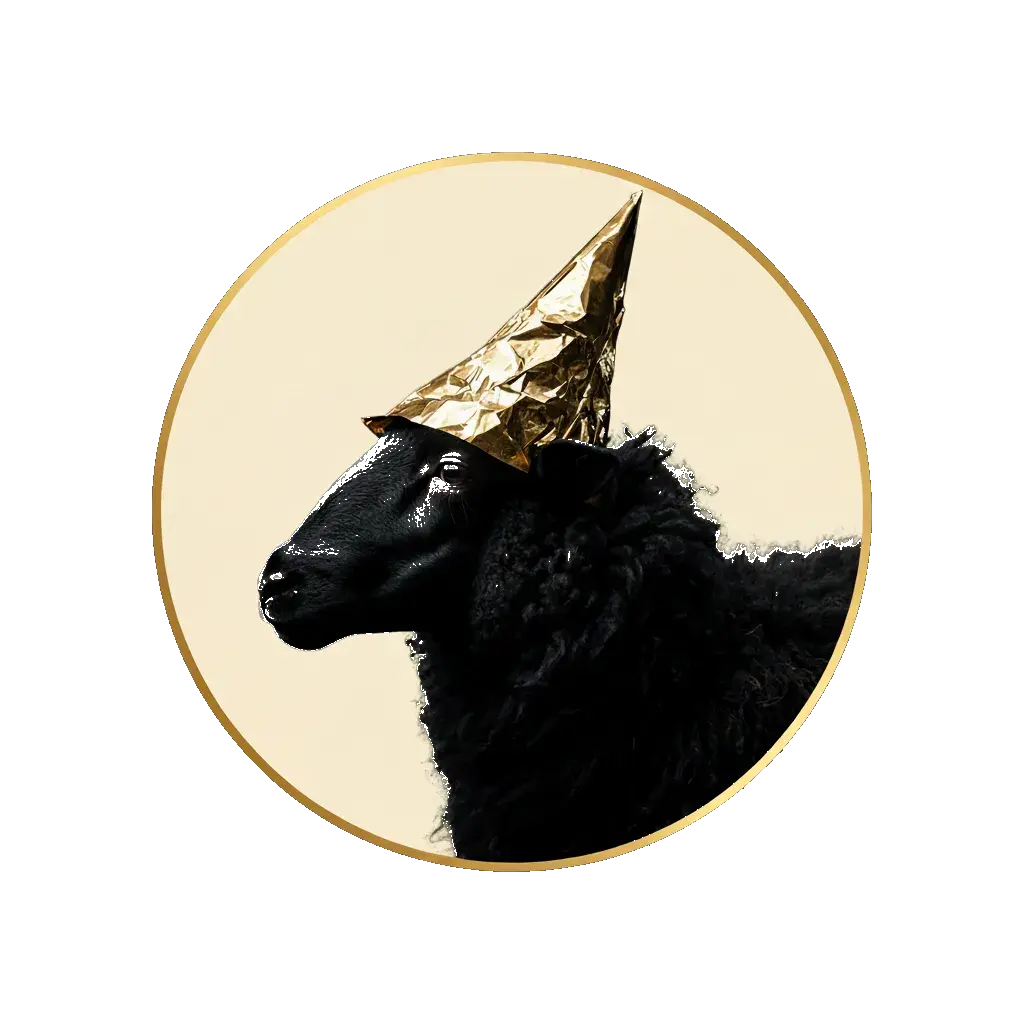
The Healthiest Adults Are Raised as Black Sheep
Suppressing your child’s nature for the sake of conformity carries heavy hidden costs for their long-term mental and physical well-being.
Topics: sheep, black, integrativeyou, being, kids, https, health, nicole
Key takeaways from this episode
- :00 Let your kid be the black sheep
- :34 The discomfort of authenticity
- :16 Dr. Nicole's black sheep childhood
- :42 Challenging illogical rules
- :30 The impact of suppressing authenticity
Pull quotes
I was the kid constantly scolded for challenging things that didn't make sense. It wasn't about being defiant; it was about the logic not adding up, and a lot of adults just want you to sit down and shut up.
I was praised for being a white sheep. I excelled at everything, but I lost my own identity in that process. It's been a long, hard journey to figure out who I actually was underneath all that achievement.
Your kid has an incredible BS meter. When you tell them 'don't curse' while cursing in the same sentence, they don't learn the lesson; they just learn you're full of shit and not to be trusted.
Transcript
Dr. Nicole (00:00)
Alright, guys, we're just gonna get into it. Let your kid be the fucking black sheep. Let yourself be the fucking black sheep. It's you know, we we've created this brand around black sheep, and it it kind of just happened. But I think that when it clicked, it clicked. We realized that damn, we have been the black sheep. Our well, I I'll say.
Dr. Nick (00:29)
No,
no we no.
Dr. Nicole (00:29)
I have been
the black sheep all of my life. Nick has been a black sheep. He crossed over. He was tired of of just bah
Dr. Nick (00:34)
I crossed over. I w I was a white sheep.
Well, I had enough feedback mechanisms,
symptoms in my life that I was like, okay, I can keep doing this or I can become a black sheep. And for us, a black sheep is just being your true authentic self. It's being uniquely an empower you. You know, not just doing something because it feels good because everybody else is doing it. It's sometimes very uncomfortable to do the things that are different than society. And we
Dr. Nicole (01:07)
Yeah.
Dr. Nick (01:11)
We live that. We're comfortably uncomfortable all the time.
Dr. Nicole (01:16)
Well, that's why I feel passionate about this, because I was the kid who got scolded constantly because I was being a a a super mega queen black sheep. You know, there were just things that I was praised. Seriously. Seriously. We had very different upbringings. But I was
Dr. Nick (01:31)
And I was the opposite, I was praised for being a white chief.
Mm-hmm.
Dr. Nicole (01:42)
Just always asking questions. Some of it came out of curiosity. And then a a lot of times I was just challenging things that didn't make sense to me. And it's not that I thought I was the smartest person on the planet, but if something didn't make sense, I would challenge it. And a lot of adults were like, sit down, shut up. We know better. You don't. You're a kid. And I was like, I don't I don't understand. And they're just like, you're a kid.
So it kind of fueled the black sheep fire quite a bit. But I have no idea why I've been wired the way I have. But even when I was in school, I remember not authentically not understanding why I had to raise my hand to go to the bathroom. It made no fucking sense to me. Why do I have to ask to go use the bathroom?
And so, of course, I got scolded for that. Stop challenging the teachers. You know, you're gonna go to the principal's office. And again, it was just not a very forgiving place for kids that thought differently, challenged things, challenged ideas, challenged principles. And you just kind of got beaten down and
There's obviously a variety of different effects. For me, it made me have a lot of rage, which served me in certain ways of my life and and didn't in other aspects of my life. But in other kids, it makes you feel anxious. It makes you feel self-conscious. It makes you feel like you are an outcast. It can make you feel isolated. And that's a lot of what's happening now. There's a lot of kids that feel that way. And
One thing that I want to drive home, because Nick, you were we were hopping on here and you were talking about authenticity. And I feel like this is a really important thing. Let your kid be authentic. But we've been in this business of integrative medicine for over 15 years. And when we saw family dynamics or sick kids and we looked deeper at the family dynamics, there was something that was a theme. And it was.
When kids were
I'm trying to think the right way because every kid kind of handled it differently. But they they had turmoil with their parents, and it was because the parents were not practicing what they preach. So an example is they were telling their kid to act a certain way, but the parent didn't act that way. They were telling their kid not to do certain things, but the kid
Or the parents did that thing. They would say, alcohol is bad as they had a cocktail in their hand. They would say, don't fucking curse as they curse in the very sentence. They would say, always respect your teachers as mom and dad are disrespecting each other in a brutal fight in front of the kids. So they were trying to teach these lessons to their kids, but they were not actually upholding the lessons.
And you may think my kid's not smart enough to understand that. My kid doesn't have enough emotional intelligence to understand that. They fucking do. But they're not, they're not having this intellectual conversation of like, mom and dad, you are not practicing what you preach. They're just looking at you're full of shit, and I'm just am not gonna listen to you. I'm gonna challenge you. I'm not gonna listen to you, and I'm not gonna follow your rules because you don't follow your own rules. So that's a problem.
Dr. Nick (05:33)
So I have the question of the elephant in the room.
How do you raise an authentic kid?
'Cause we live in a we live in a world that's designed for in authenticity. It's designed for the white sheep. It's designed to follow the leader. Like even in school, it's like you know, because I told you to. And now we've been so programmed into that. Even you know, I catch myself every once in a while saying like 'cause I told you to. Just do it because that's w and then I'm like, There I am again, creeping back up.
Dr. Nicole (05:44)
Practice what you preach.
Mm-hmm.
Dr. Nick (06:14)
Trying to be a white sheep.
Dr. Nicole (06:15)
Yeah.
And it's not about being perfect. It's about catching yourself in those moments. But it's also understanding the effects of when you're telling your kid to act a certain way to not get in trouble at school or to act a certain way to fit into a certain friends group, to act a certain way so they don't stand out. That's I think where we're getting ourselves in trouble because.
We're pretty much telling our kid to suppress parts of themselves to succumb to society, to succumb to what's normal, to succumb to all of these environmental factors. And at the end of the day, if you think those environmental factors are going to dratically, drastically improve their outcomes, I understand. If you think, you know, you want to fit into this friends group because this is gonna give you a lot of opportunities later in your life.
So be yourself, but maybe don't go too far down one end of the spectrum. I can understand aspects of that. But if you are asking your child to completely suppress parts of themselves because they need to fit into a friends group that actually will mean nothing in five years from now, that is problematic. I'm gonna let you go so I can go get that gate bell. Hit it, kid.
Dr. Nick (07:37)
Okay.
So let's get deeper on authenticity. Because I grew up, like I said, being the white sheep. You know, I had a high expectations from my family and it was to excel and I I did that. I did that in, you know, multiple different sports. I did that in band, I did that in blah blah blah, all the different things. And as a child that was amazing because I learned what both the body and the mind could achieve
But I lost identity. I lost who I was in that process. And it's been a journey for me to really figure that out. And it's honestly been a struggle. because I'm like a chameleon. I can do so many different things and I can do it pretty well. So that makes it difficult. And when I work with families, it's always one of my favorite things to do is, you know, help them
learn how to express the best parts of not only themselves, because that's part of healing, but to express the best parts of children. And that's my favorite part of being a dad, because most people never learn that. They never learn how to do that. And it really just comes down to helping somebody be the best version of themselves. And it's like, well how can you help a little child be the best version of themselves?
the exact same way you do with an adult. You figure out what's the most fulfilling things for them, what their top values are. Because just think for yourself. If you're doing something that's highly productive, it means it's fulfilling. It means you're actually building yourself up with self-confidence, self-trust, self-resilience, and it allows you to be adaptable. The more adaptable you are, the healthier you are.
Dr. Nicole (09:07)
Mm-hmm.
Mm-hmm.
Dr. Nick (09:25)
A child's the same way. You just gotta figure out what lights them up 'cause that's how they want to learn. You know, with with Quentin, I get him to eat sometimes through fighting. The kid loves fighting and he loves dinos. Awesome. Let's take that fork and let's use it like a sword and we're gonna stab the shit out of that chicken and then we're gonna eat it. Like get creative, play with them. Because if if you don't
actually take the time and space to observe what lights them up and then use that in different creative ways to actually serve them, that they're not going to be able to have the opportunity to be themselves. Eat the food. You know, it's it's that it's I'm just saying this because that's a struggle right now, 'cause Quentin doesn't want to eat. He just wants to play and do everything else like a crazy four and a half, five year old boy.
Dr. Nicole (10:20)
He pretty much runs on sunshine, that child.
Dr. Nick (10:23)
He's an alien. So it's it's taking the time to figure out your values, but it's taking time to figure out the kids' values. And then in the family dynamic, you know, one of the most important things that I work with the the parents is like, you know, the question is, how do I make the right decision? It's like, well, it's not rooted in what everybody else is doing, and it's not rooted in doing the opposite. It's the right decision is an aligned decision. It's aligned in
Is this decision going to serve your child's values? Is it in alignment with serving the family values? If so, it's the right decision.
Dr. Nicole (10:57)
Mm-hmm.
Well, I wanna talk about that from the perspective of of labeling. So I wanna give you guys a perspective and a tool that will really allow us to kind of wrap this up. Is and our kids are probably gonna come storm through this podcast right now. But when it comes to labeling, I think very often thank you, Quentin. That's okay.
Dr. Nick (11:23)
Ha ha.
Dr. Nicole (11:27)
when it comes to labeling, very often we are labeling kids to say, you know, they're not that great in school. They're a bad test taker. Thank you, Quentin. We appreciate that. they're a bad test taker. And really what it comes down to is shifting labels to the values. So one of the things that we created was the ability for
families to figure out what are your family values. AK, who are you guys? Who like what's your black sheet manifesto? Because if you actually know who you guys are as a family, what's important to you, if it's learning, if it's growth, if it's sovereignty, if it's freedom, whatever it is, you can make better decisions and you can wear your values and move away from labeling because the labels
Are really just a lack of alignment to the values. So what I mean by that is if you have a kid who's a very hands-on, kinesthetic child, and they are gonna learn through touching things and molding things and fixing things, taking things apart, putting it back together, and you put them in a school environment where everything is about listening to the teacher, taking in for information, auditory, taking tests. This kid could feel
Like a failure. They could say, I'm not smart. You could say, You're really not good in school. And that's not the case at all. You start to understand more about how your child takes in information, how do they process information? You start to really understand also where to say yes, where to say no when it comes to the family collective and even your kids' activities.
You know, what's going to be the most aligned to the family values and the kids' values when it comes to your commitments? And those commitments can be, you know, are we hi, big girl? Special guests. This is Altea.
Dr. Nick (13:31)
He's a child.
Yeah. Your first podcast.
Dr. Nicole (13:38)
And
this is really allowing you to know, you know, this could be the top activity for this child because it meets all of the values of this child and their learning interests. And then in addition to that, is when you're if your family values are also about quality time together, adventures together, traveling together, things like that, then
Dr. Nick (13:47)
huh.
huh.
Dr. Nicole (14:06)
If your kids are in tons and tons of sports and so busy, then you're going to completely not be upholding those other values of quality time together and experiences and vacations, et cetera. So this allows you to have a compass, to have a blueprint, to know more about your kids, know more about yourself, and allows you to help them embrace being the black sheep, allows you to know how to communicate with them better.
And allows you to be very particular on where you're saying yes, where you're saying no in your general environment. And it allows you to not put these labels on your kids or even on your family that are half truth. And you know, your kid might not be a great test taker, but it doesn't mean they're not smart. They might just do better in more of a hands-on type of environment.
And so this is just one example of many, but it really comes down to moving away from these labels that society has created. This is what we call injected values. What's kind of cool is when you do your own core values and kids can do their core values too with the help of their parents, is that we also give you information about the values that have been pushed on you.
What your parents or your professors or your teachers or your religion or your cul or your society, what they told you you should do, you should be, how you should act, how you should think. And that's is a very, very big eye-opener for people when they go, my God, half of what we're doing as a family, how we're acting as a family, the activities our kids are doing is based on what we think we should do, what other families in the neighborhood are doing, what other families at church are doing.
It's not actually what we want to do or even align to us. It's more of like what we're expected to do or expected to be or how we're expected to act. So it's very empowering when you know more about your family and your kids, and you can make decisions out of that compass opposed to all the things feeling the guilt and shame of what you should do and what you should be and how you should think. So I'm gonna leave it there because clearly the kids are home.
And there is no there's no more. Ciao.
Dr. Nick (16:29)
Say tchau
tchau. Tchau.
Dr. Nicole (16:32)
Chao ciao. Ciao.
All right, we'll see you on the next one, guys.
Related episodes
About Integrative You Radio
Integrative You Radio is a root cause medicine and integrative medicine podcast hosted by Dr. Nicole Rivera and Dr. Nick Carruthers — two integrative doctors who build personalized wellness protocols from your DNA, minerals, hormones, gut, and nervous system rather than from a population template. Looking for an integrative doctor who reads your labs together instead of in isolation? This is the show.
Further reading
Listen and read the full episode →